

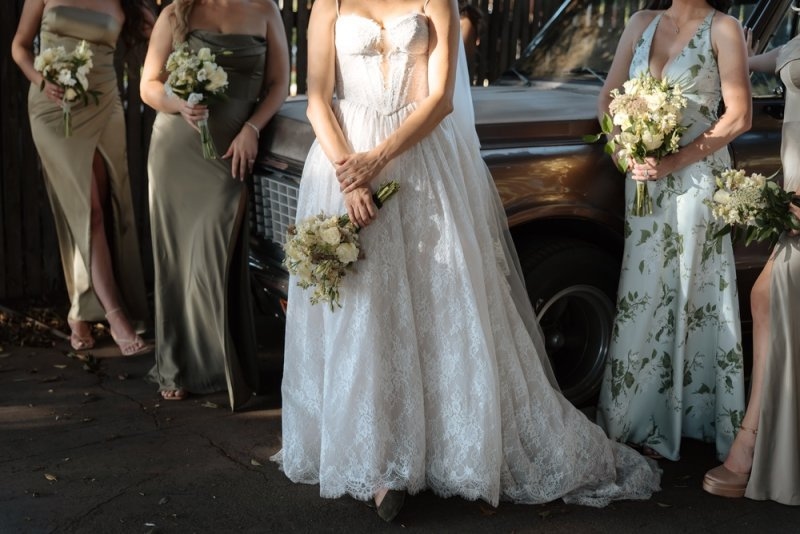
Honestly, finding your wedding dress isn’t just about following trends. Maybe you love the delicate lace from one decade, the sleek lines from another, or the bold glamour of old Hollywood. That’s exactly where vintage wedding dresses shine. They offer a sense of history, but still leave plenty of room for your own personality.
The best vintage dresses don’t look stuck in another time. They pull details, shapes, fabrics, and finishes that work beautifully now. We’re going to look at a range of vintage wedding dress styles, practical things to keep in mind, and how to choose between authentic vintage gowns and beautiful, newer designs with a vintage feel—for a look that actually feels like you.
The appeal of vintage wedding dresses is not simply nostalgia. It is the detail. Beaded panels, covered buttons, soft sleeves, narrow waists, structured bodices, and unusual necklines can make a gown feel unlike something pulled from a standard bridal rack.
A good vintage wedding dress also photographs differently. Texture catches light. Older silhouettes often create a stronger outline, which can look striking in both formal portraits and less posed photographs.
A vintage wedding dress can borrow from several periods without copying one exactly. The 1920s bring dropped waists and beading. The 1930s favor fluid satin and bias cuts. In the 1950s, wedding dresses had big, full skirts and cinched waists. By the 1970s, styles shifted to include more lace, longer sleeves, and looser fits.
Vintage bridal gowns often have small details that make them memorable rather than merely fashionable. A high neckline, antique-style embroidery, pearl buttons, or an unusual sleeve can become the detail guests remember.
Vintage bridal gowns also work well for brides who dislike overly polished bridalwear.
Don't Miss: Traditional Wedding Clothing Styles That Feel Relevant Today
Not every bride wants an actual older gown. Vintage inspired wedding dresses offer the visual character without some of the practical problems that can come with age, fragile fabric, or limited sizing.
A modern vintage wedding dress can borrow the best parts of earlier designs while using contemporary construction.
When comparing vintage inspired wedding dresses, focus on individual details instead of choosing an entire decade. These elements can create the look without making the outfit feel theatrical.
Some wedding dress styles survive because they flatter rather than because they are fashionable. That is useful when choosing vintage wedding dresses, since the goal is usually longevity.
| Style | Vintage Influence | Best For | Overall Feel |
|---|---|---|---|
| A-line | 1950s | Most body shapes | Classic |
| Bias cut | 1930s | Minimalist brides | Fluid |
| Ball gown | 1950s | Formal venues | Dramatic |
| Sheath | 1930s–1970s | Slim silhouettes | Sleek |
| Tea length | 1940s–1950s | Casual weddings | Playful |
A huge skirt may look wonderful in a grand ballroom but become awkward at a small garden ceremony. Likewise, a slim vintage wedding dress can feel perfect for a city wedding but perhaps too restrained for a formal estate setting.
Think about movement too. If dancing matters, wedding dress styles with lighter skirts or shorter hems can be more practical.
Suggested Reading: Bridesmaid Dresses Trends 2026: Styles Michigan Brides Love
Timeless wedding dresses are not necessarily plain. They simply avoid relying on one short-lived trend. Vintage wedding dresses often achieve this through recognizable shapes. Satin, lace, clean necklines, modest embellishment, and strong tailoring rarely look completely dated.
Someone choosing between vintage bridal gowns and vintage inspired wedding dresses should consider condition, fit, comfort, and alterations before focusing on appearance alone.
A real gown from the 1940s? The detail and work are amazing, but the seams might be delicate. A newly made vintage wedding dress may look similar while offering stronger construction.
Also Read: Boho Wedding Dresses for Free-Spirited Brides With Style
Vintage dresses stand out because they offer more than just another trend. They have shape. Texture. History. All those details add up and help a bride stand apart. Whether you choose a true vintage gown or a new dress inspired by the past, choose the one that works for your body, your venue, your comfort, and your personality.
Try on lots of styles. Pay attention to how you move—and don’t skip practical stuff like whether the dress needs to be tailored. The best vintage wedding dresses are the kind you never forget, because they look and feel right on you.
Some vintage fabrics can be dyed by a professional, but results really depend on the fabric type, the age of the dress, the current color, and how it was made. Old or delicate gowns should always be looked at by a specialist first; trying to dye them yourself can ruin the dress for good.
Store your dress in a breathable, acid-free garment box, or use archival-quality materials. Skip plastic covers for long-term storage, because they trap moisture and damage fabric over time.
Absolutely, if you take care of it. A family wedding dress can become a powerful heirloom, especially if it’s cleaned and carefully stored. Even if the original dress is too fragile to wear, you can save meaningful pieces like lace, buttons, or trim and work them into another gown.
And when it comes to accessories, let them complement the dress—not steal the show. Pearls, classic veils, vintage headpieces, gloves, and delicate earrings are all great choices.
They can be—but the fabric and length matter a lot. Antique lace or really delicate materials aren’t built for grass, dirt, or damp weather. A newer gown with vintage style, but sturdier construction, is usually a safer bet for an outdoor celebration.
This content was created by AI